
Prehistoric Giants: The Wonderful Galapagos Tortoise
Click here to download or purchase prints.
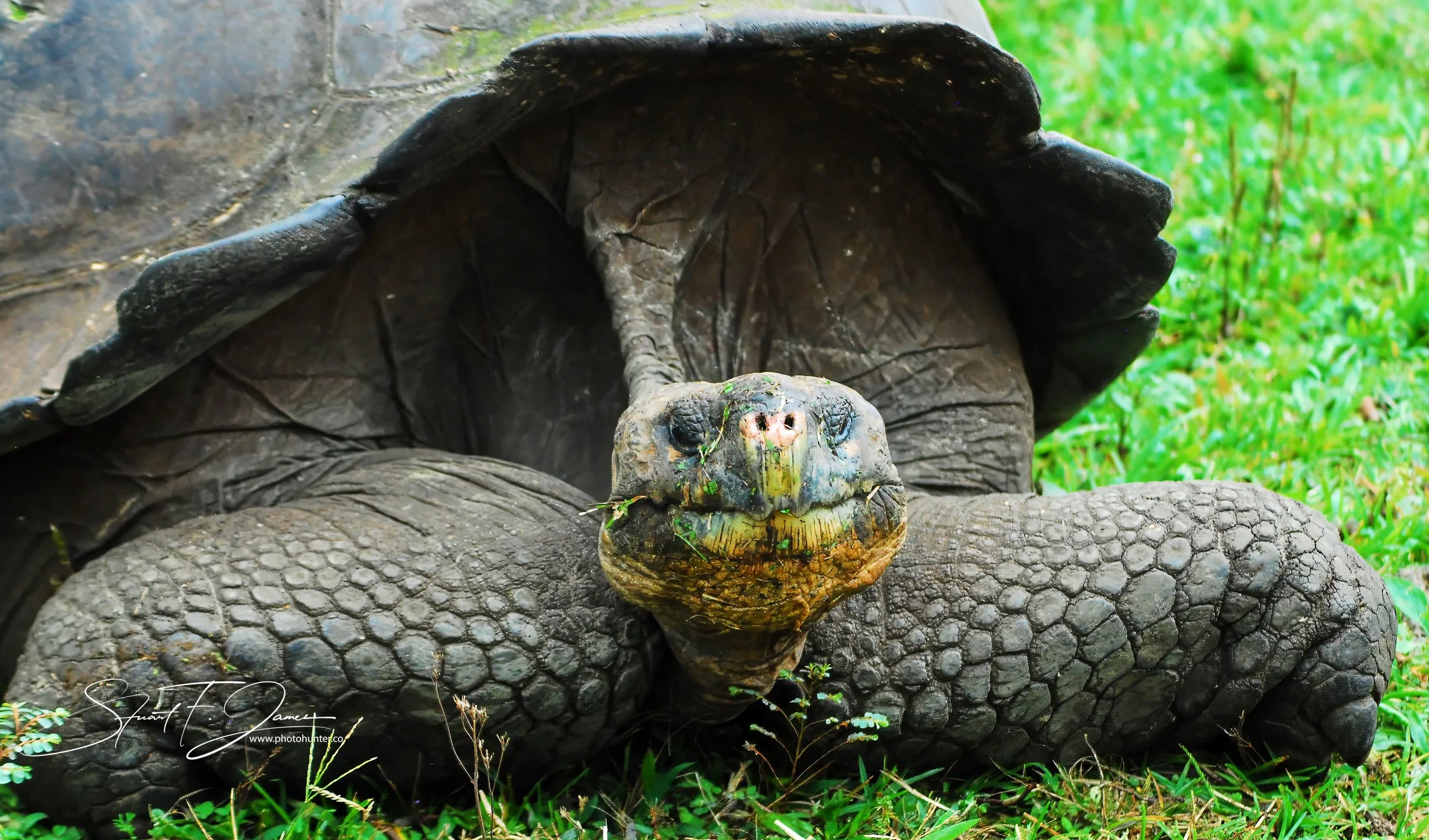
Imagine sitting among the Galapagos Tortoises, six feet away, becoming part of the tortoise family, and capturing the moment in photographs. That is what I did, and I remember the experience as if it were yesterday.
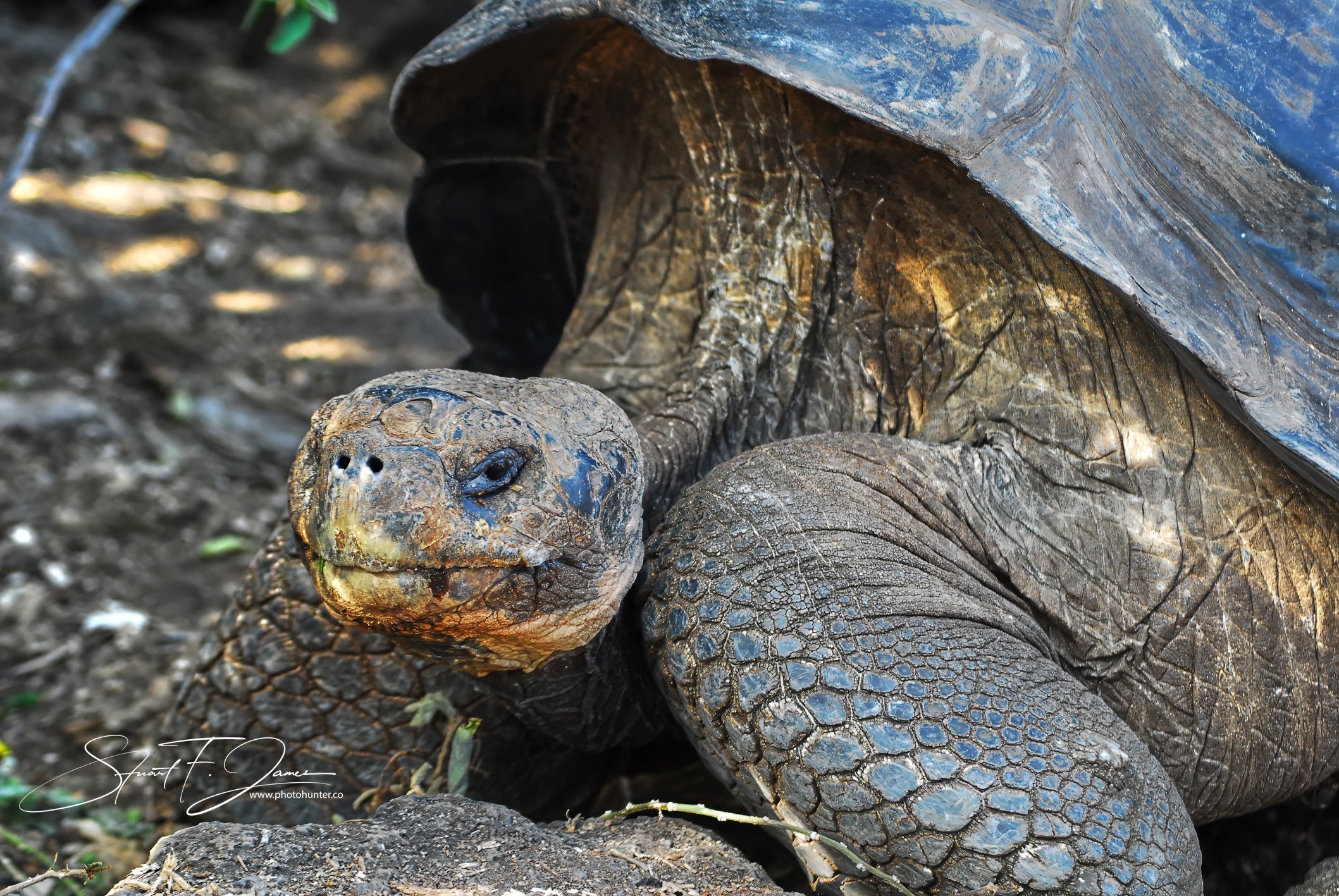
The Galápagos giant tortoises are native to the Pacific island archipelago of the same name and are fascinating and ancient creatures.
Click here to download or purchase prints.
Galapagos Tortoises migrated from South America to the Galapagos Islands between two and three million years ago, probably during a major storm. After the migration, the species diversified and split into around 15 subspecies, each with a distinct distribution and some differences in size and form.
The giant Galapagos Tortoises are best known for inspiring Charles Darwin’s theory of evolution after his legendary 1835 expedition.
Galapagos Tortoises are very large. The larger males can reach lengths of up to 6 feet from head to tail, 4 or 5 feet over the curvature of their shell, and a weight of up to 880 lbs. The females of the species are generally smaller.
Click here to download or purchase prints.
The Galapagos Islands were named after the Galapagos Tortoise. These giant tortoises were once so prevalent in the island archipelago off the coast of Ecuador that the Spanish explorers there in the mid-1500s named the islands for them – the name ‘Galapago’ means ‘tortoise’ in Spanish.
In 2012, Lonesome George – the last surviving member of his species, the Pinta tortoise – died on his home island of Pinta. Living to over 100 years old, Lonesome George became a much-loved public figure, and his death was the catalyst for worldwide concern about endangered species.
Repeated efforts were made to find George a mate to continue his species.
Click here to download or purchase prints.
Unfortunately, these efforts were in vain, and the Pinta tortoise is now extinct.
The tortoise species is generally known for its longevity, and the Galapagos tortoises are no exception, often reaching the impressive age of one hundred years or more.
A Galapagos tortoise named Harriet lived to be 175 years old.
The Galapagos Tortoise can spend up to 16 hours a day resting or sleeping, lying down to conserve energy.
Galapagos tortoises are herbivores, meaning they primarily eat plant matter. They have a varied diet that includes grasses, leaves, fruits, and cacti. These tortoises are known to be opportunistic feeders, meaning they will eat whatever is available in their environment.
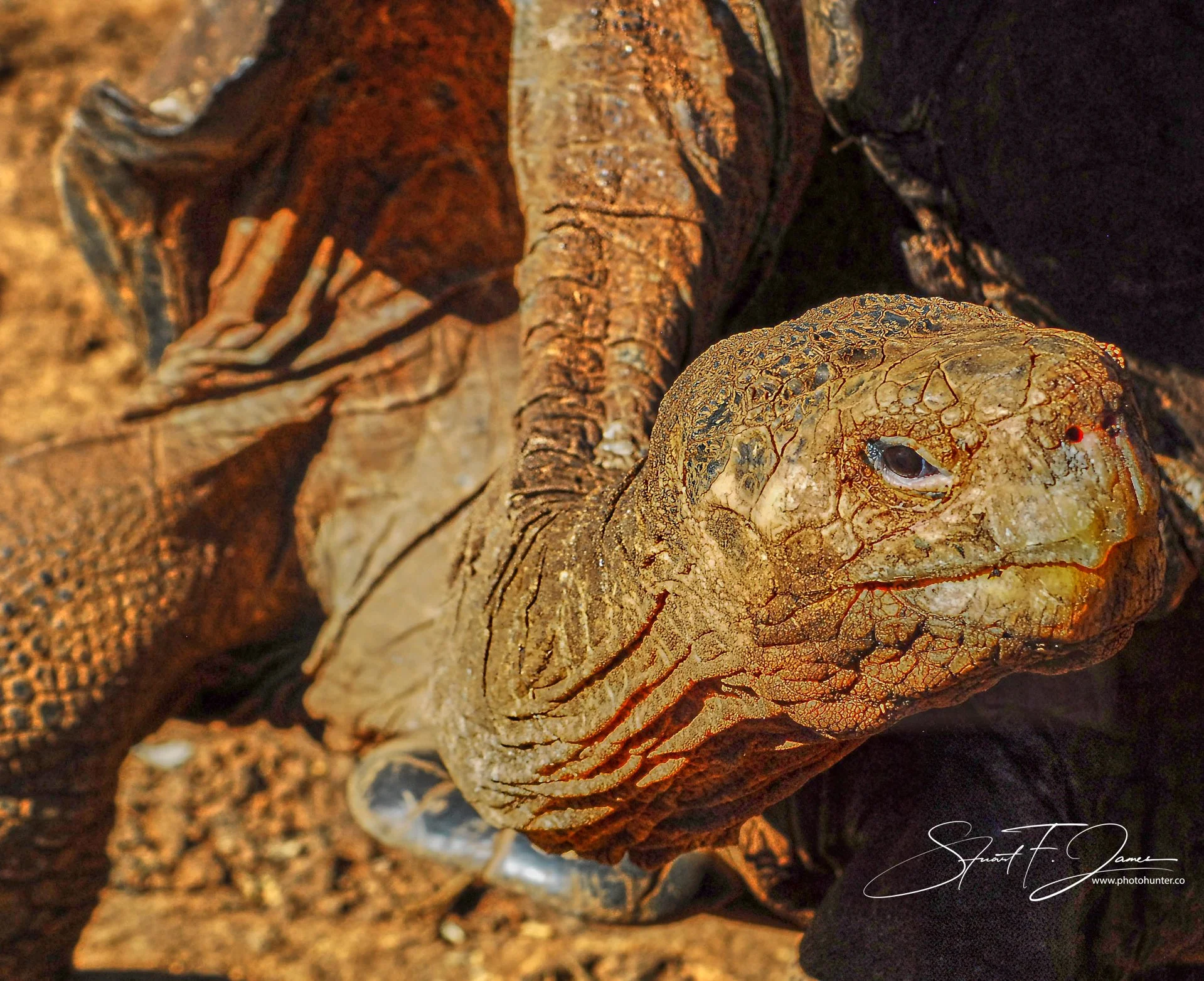
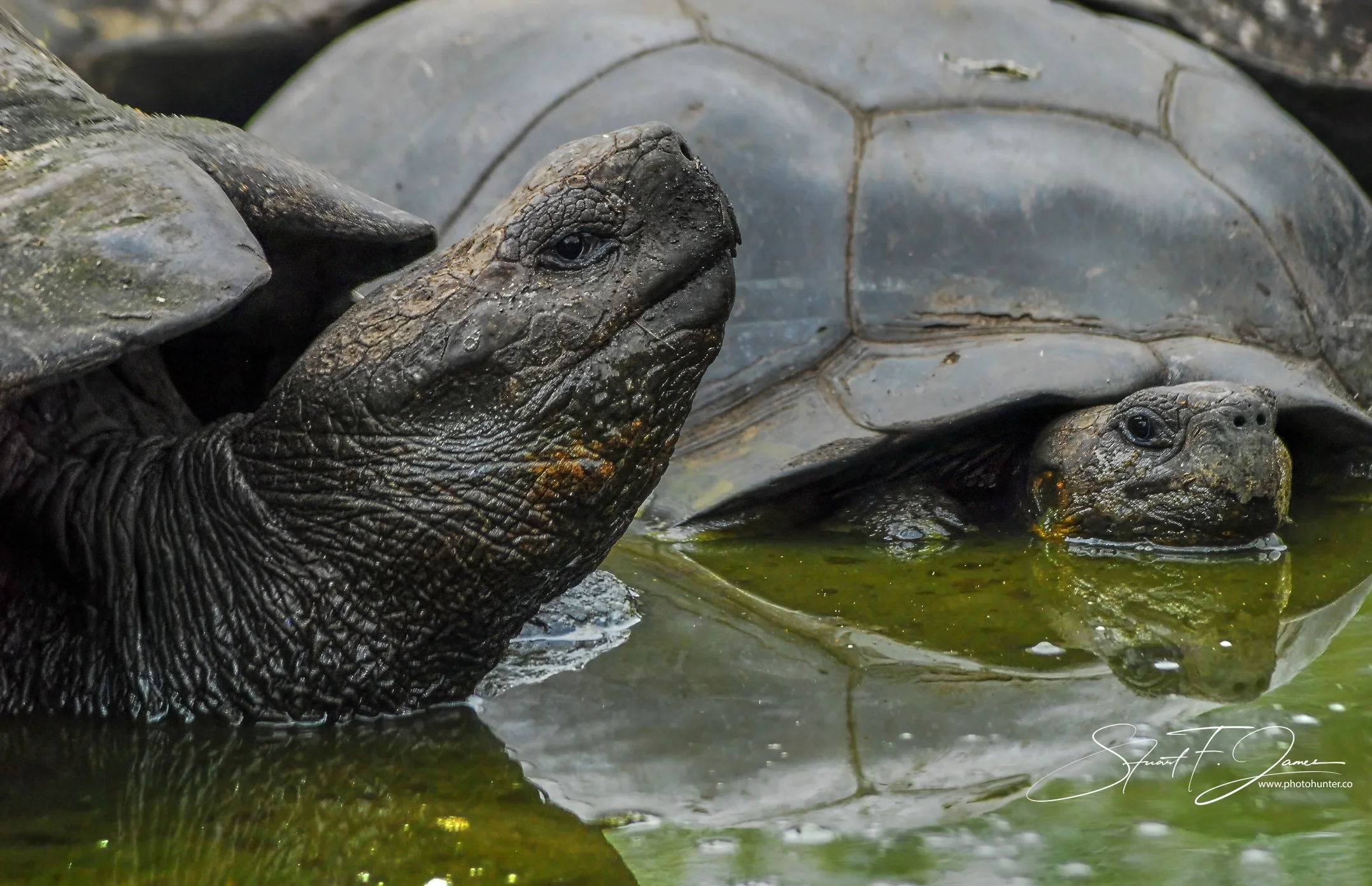
I took these pictures over 20 years ago with a Nikon D200 and a 100-300 mm Nikon lens. As you can see from each photo, I was quite close to the tortoises. In fact, the tour guide allowed me to get within 6 feet of these magnificent Galapagos tortoises. For many of the photographs, I sat on the ground to photograph the tortoises around me. It was a once-in-a-lifetime experience to sit among the tortoises as if I were a member of the tortoise family.
For you camera buffs, I took these photos at 1/180 of a second and an f-stop of f/7.1. These were some of my earliest attempts to capture wildlife in action. With the Galapagos tortoise, the action is pretty slow because they live their long lives to the “slowest.”
…and it was fun.
Source for Galapagos Tortoise facts:Vet Explains Pets
Stuart F. James